
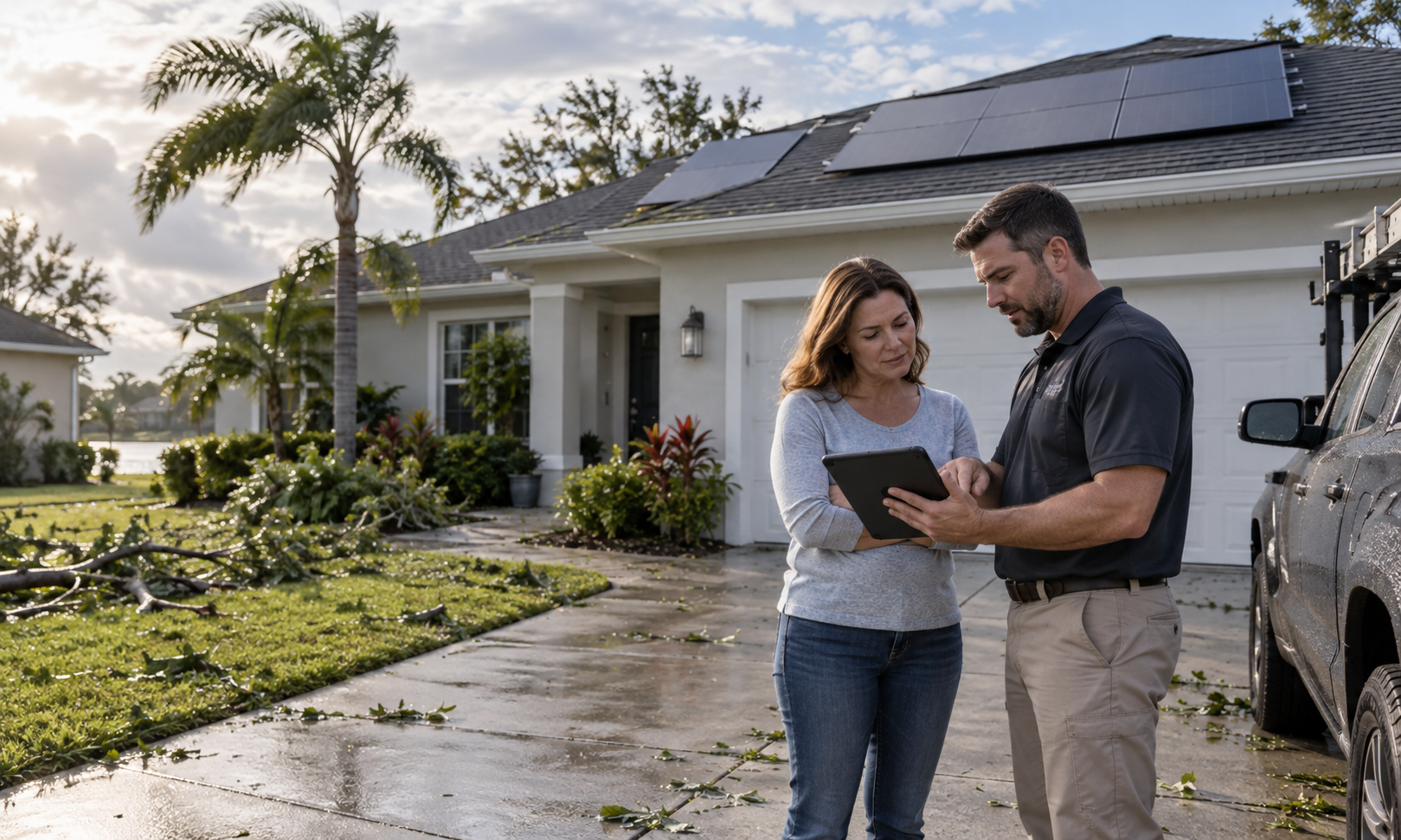
Post-Storm Roof and Solar Inspection in Central Florida: What to Check
After severe tropical weather, the safest first inspection happens from the ground. Look for obvious roof damage, fallen debris, damaged gutters, and changes in solar monitoring, but do not climb onto a wet or storm-damaged roof or touch electrical equipment that appears compromised.
Castaways Energy & Roofing can coordinate roofing, solar service, and home energy upgrades, which is useful when one storm affects several systems at the same property.
Start With Safety
Follow local emergency guidance. Stay away from downed power lines, standing water near electrical equipment, and damaged structures. If the property has an active electrical hazard, contact the utility or emergency professionals as appropriate.
Photograph Visible Damage Before Cleanup
From safe locations, take photos of the roof, siding, gutters, solar array, and debris impacts. Documentation can help you remember what changed and may be useful when communicating with contractors or the insurance carrier.
Check the Roof From the Ground
Look for missing shingles or tiles, displaced metal, damaged flashing, punctures, and debris. Inside, check ceilings and attic areas for new water intrusion.
Castaways’ roofing team can evaluate repair, replacement, and solar-related roofing needs.
Review Solar Monitoring
If the array looks normal but production has dropped or equipment alerts appear, the system still deserves professional evaluation. Do not touch broken panels, exposed wiring, or damaged electrical equipment. Solar modules can produce electricity whenever light reaches them.
Submit a solar service request if performance changes after the storm.
Check Battery and Generator Status
Review battery alerts, charge status, and any unusual behavior. For standby generators, follow manufacturer guidance and schedule service if the unit displayed faults or operated abnormally.
Inspect Gutters and Drainage
Storm debris can block gutters and downspouts even when they were clean before the event. Clear accessible ground-level drainage and have damaged sections professionally repaired.
Coordinate Roof and Solar Work
If roof repair requires removing solar panels, the two projects should be planned together. Castaways’ integrated roofing and solar capabilities can help avoid the confusion of separate contractors making changes without coordination.
When a Small Roof Problem Becomes a Solar Problem
Solar mounting penetrations and roof flashing are designed to work together. If a storm damages roofing material near the array, repair may require coordinated solar removal and reinstallation. That is one reason not to let an unqualified crew move panels simply to reach the roof.
What to Record From the Battery or Generator
After an outage, save any error messages, runtime information, and unusual operating behavior. Note which loads remained powered and which did not. That real-world information is useful if the system needs service or if you want to expand backup capacity before the next storm.
Insurance Documentation and Contractor Scope
If you plan to contact your insurer, follow the policy’s reporting requirements and keep photos, contractor findings, and repair estimates organized. The roofing or solar contractor can document physical conditions, while the insurance company determines coverage under the policy.
Post-Storm Priority Order
- Personal and electrical safety
- Stop active water intrusion where safely possible
- Photograph visible conditions
- Schedule roof and solar evaluation
- Review backup equipment performance
- Plan permanent repairs and improvements
Watch for Delayed Water Intrusion
Not every leak appears during the storm itself. Wind-driven rain may enter a vulnerable area and show up later as staining, odor, or damp insulation. Recheck ceilings and attic spaces during the days after severe weather, especially after another rain event.
Know When Temporary Protection Is Appropriate
If roof damage is allowing active water entry, temporary mitigation may be needed until permanent repair can be scheduled. Use qualified professionals for tarping or emergency roof work when access is unsafe. Temporary protection should not be mistaken for the final repair.
When solar panels occupy the affected roof area, coordinate the temporary and permanent plan with the solar team so electrical and roofing work do not conflict.
Frequently Asked Questions
Should I get on the roof after a hurricane?
No. Wet, damaged roofs can be unstable and slippery.
What if the solar monitoring app shows zero production?
It could indicate an equipment problem, communication issue, or outage-related condition. Do not open electrical equipment.
Can Castaways help if another company installed my solar?
Yes. Castaways’ service page states that service is available for Castaways customers and systems installed by other companies.
Use the Storm as Information for the Next One
Every severe-weather event shows which parts of the home plan worked and which need improvement. Contact Castaways Energy & Roofing to coordinate roofing, solar service, storage, generator, or electrical improvements.
How much will solar cost you?
Find out. It’s FREE!